Harmonies That Moves From Resting to Tension and Back Again Are Called
Want to know the difference between a Picardy Third and a Neapolitan 6th? Scroll through our musical terms (which we are always updating) to find out!
Pro tip: use CTRL-F or CMD-F to search for a term!
8vb
Abbreviation for ottava bassa or "at the octave below." This indication is establish below specific notes on a staff and indicates that those notes should be performed one octave lower than written.
Written Performed

12 Bar Blues
The most common form of the blues, it is a twelve-bar chord progression that is repeated throughout the song. A cracking example of a 12 Bar Blues song is "Tutti Frutti" by Little Richard.
https://www.youtube.com/lookout man?v=LVIttmFAzek
A Capella
Grouping or solo singing without instrumental accompaniment. Some groups use their voices to emulate instruments, while others are more traditional and focus on harmonizing. One of the most pop a capella groups is Pentatonix. Check out this video of one of their most popular songs, "Mary Did You lot Know."

A Tempo
A directive to return to the original tempo afterward a deliberate deviation.
Advertising Libitum
Probably more recognizable equally "advert lib", it means "at the discretion of the performer." It gives the performer control over the passage, for example, changing the tempo of a particular passage, or a part that may be omitted if desired.
Anacrusis
Also known as a pickup, information technology is a notation or sequence of notes which precedes the first downbeat in a bar in a musical phrase.

Arpeggio
When the notes of a chord are performed one after the other instead of all at the aforementioned time.
Chord vs. Arpeggio

Atonal
A generalizing term used to define music that seems to lack a clear tonal center.
Aubade
Morning music; a morn concert in the open air performed for a specific individual. This is dissimilar from a serenade, which is performed in the evening.
Bandmaster
A generic term used to designate the leader of a ring. Although this term can be applied to any person that leads a band, information technology is most ofttimes associated with the leader of a armed forces ring, concert ring symphonic band, or marching band. The bandmaster is generally the managing director or conductor of the band and can also responsible for the administrative aspects of the organization.
Bagatelle
Used as the championship of a short light-hearted piece of music, information technology was employed most notably by Beethoven in a series of such compositions for piano. The descriptive championship was thereafter used by a number of other composers.
Bal Musette
A style of French music and dance that get-go became popular in Paris in the 1880s, normally accompanied past accordions.
Baritone
The Baritone is the second everyman singing range, and overlaps both Bass and Tenor. The typical baritone range is from A2 to A4, and might extend downwards to F2 or up to C5. The baritone voice type is the about mutual type of male voice.

Baroque
A way of European architecture, music, and art demonstrated from about 1600 – 1750 (following The Renaissance) that is characterized by ornate item. During this time music became tonal (as opposed to modal) and saw the birth of new forms, including the Opera, Sonata, Oratorio, Suite, Fugue, and Concerto. A few of the major composers during this fourth dimension include Vivaldi, Bach, Handel, Purcell, Scarlatti, and Pachelbel.
Scan Baroque Sheet Music.
Bass
The lowest singing range and typically lies between E2 to E4. In the lower and upper extremes of the bass voice, some basses tin sing from C2 to G4.

Binary Form
Describes the construction of a piece of music that is divided into two different sections. The ii sections are usually labeled A and B.
Cake Chords
Also referred to as 'locked hands' it is a way of piano playing where both hands are 'locked' together, playing chords in parallel with the melody, commonly in adequately close position. It is a technical procedure requiring much exercise and can sound dated if the harmonies are non advanced enough.
Melody

Melody with Block Chords

Blueish Notation
A flatted note, especially the third or seventh scale caste, recurring frequently in dejection or jazz as a characteristic feature.
Dejection Calibration
A Pentatonic calibration with one more than note (added in the scale). This annotation is known every bit a blue annotation and it is the flattened 5th in the case of the Minor Pentatonic Scale or the flattened tertiary in the example of the Major Pentatonic Calibration.
C Major Blues Scale

A Minor Blues Scale

Bongo Drums
A pair of permanently attached minor unmarried-headed drums the larger of which is tuned about a fifth beneath the smaller drum.

Borrowed Chord
Too called mode mixture and modal interchange, it is a chord borrowed from the parallel key (small or major scale with the aforementioned tonic). For example, a song in C Major could "borrow" chords from C Pocket-sized.
Central of C Major
Parallel Key = C Modest

In C Major, at that place are no sharps or flats, so the Fm Chord is being "borrowed" from C Minor to create a different sound.
Borrowed Division
The exercise of "borrowing" the subdivision of 1 meter into another meter. For example, borrowing the subdivision of unproblematic fourth dimension and inserting it into chemical compound fourth dimension, or vice versa.

Breath Mark
Also known as a luftpause, it is a symbol used in musical notation. It directs the performer of the music passage to take a breath or to make a slight interruption. This pause is normally intended to shorten the duration of the preceding note and not the tempo; in this role, it can be thought of like a grace residuum. Information technology is usually indicated by a comma-like symbol.

Breve
A note lasting ii times equally long as a whole note (a double whole notation). It is normally indicated as:

Caesura
A pause or interruption in music, notated by two diagonal lines ( // ). The suspension can be of any length at the discretion of the conductor.
Cadence
A progression of at to the lowest degree two chords that concludes a phrase, section, or piece of music.

Cajon
A box-shaped percussion instrument originally from Republic of peru, played past slapping the front end or rear faces (by and large thin plywood) with the easily, fingers, or sometimes diverse implements such as brushes, mallets, or sticks.

Canon
A compositional technique, based on the principle of strict imitation, in which an initial melody is imitated at a specified fourth dimension interval by one or more parts, either at the aforementioned pitch or at some other pitch.
The oldest known type of Canon is called a Round. Nosotros are going to demonstrate it with the melody of "Row, Row, Row, Your Boat". Notice how the same melody is repeated on each line (ii confined after the previous archway) so that the parts are overlapping. Grab some friends and effort to sing or play through information technology!

Cappriccio
A quick, improvisational, spirited slice of music.
Chromatic Calibration
A musical scale with twelve pitches, each a semitone to a higher place or below some other.

Clefs
A symbol that is placed at the left-manus end of a staff, indicating the pitch of the notes written on it. There are many types of clefs, but the four most common are Treble, Bass, Alto, and Tenor.
Treble Clef
- Besides known every bit the G Clef
- Notates the college registers of music

Bass Clef
- Also known every bit the F Clef
- Notates the lower registers of music
![]()

The Treble Clef and Bass Clef are the two most ordinarily used past all instrumentalists and vocalists
Alto Clef
- Places Heart C (C4) on the tertiary line
- Also known every bit the Viola Clef
- Used for the viola, the viola da gamba, the alto trombone, and the mandala

Tenor Clef
- Places Middle C (C4) on the second line
- Used for the upper ranges of the bassoon, cello, euphonium, double bass, and trombone

Circumvolve Of Fifths
The relationship among the 12 tones of the chromatic scale, their respective fundamental signatures, and the associated major and minor keys. Circumvolve of Fifths progressions are considered to be harmonically very stiff, in the sense that they pull our ears toward one chord being the tonic.

Learn more about the Circle of Fifths and how to use it.
Common Time / Cutting Fourth dimension
Common Time is the same matter as 4/4 Time. Information technology can be referred to by a "C" symbol, simply it is more common to see four/four. Cut Fourth dimension, however, is unremarkably indicated past the symbol "C" with a slash in the centre of information technology. This means that it is actually two/4 Fourth dimension notated and executed similar 4/four Time, except with the trounce lengths doubled.
Common Time Symbol

Cut Time Symbol

Compound Meter
Any time signature in which the upper figure is a multiple of 3, such as six/eight, 9/8, 12/8, etc. Beats are divided into iii notes, as opposed to Uncomplicated Meter, where they are divided into two.
Simple Meter Compound Meter

Contralto Vocalisation
A type of classical female person singing voice whose vocal range is the everyman female voice blazon. The contralto's song range is adequately rare; like to, but different from the alto, and well-nigh identical to that of a countertenor, typically betwixt the F below heart C (F3) to the second F in a higher place heart C (F5), although some voices accomplish beyond.

Opposite Motion
The motion of two melodic lines in contrary directions.

Da Capo
Used equally a direction in music, it is a musical term in Italian pregnant "from the beginning". It is often abbreviated as "D.C."
Deceptive Cadence
A chord progression that seems to lead to resolving itself on the final chord; but does non.

In this particular phrase, yous would expect the V7 Chord to resolve to I.
The Cadency is "Deceptive" because it resolves on the Minor vi chord instead.
Decibel
Commonly abbreviated every bit "dB", it is a logarithmic unit for measuring the intensity of sound which corresponds to the listener'due south perception of loudness.
Approximate Typical Audio Levels

Diphthong
A sound formed by the combination of two vowels in a single syllable, such as in the earth "loud" or "money." Singers must exist aware of diphthongs in solo vocal music, just even more than and then aware in vocal or choral ensembles. Even for the nearly experienced directors, getting a choir to sing a diphthong in unison is a very tricky task!
Dissonance
Harsh, discordance, and lack of harmony.
Dominant
The fifth tone or degree of a diatonic scale or the triad build upon this caste. For example, in the central of C Major, the Dominant Scale Degree would be G, and the Dominant Chord would exist Thou Major.
The strongest harmonic progression in tonal music is from the dominant chord to the tonic triad.
In the primal of C Major, Chiliad is the fifth Calibration Degree, making it the Dominant.
The post-obit excerpt displays the Ascendant CHORD.

Notice the 1000 Chord has an added 7th, which gives information technology an even stronger sound and desire to resolve to the tonic.
Dolcissimo
Used as a management in music, meaning "sweetly, softly, with tender emotion".
Doloroso
A directive to musicians to perform the indicated passage of a composition in a sorrowful, mournful or plaintive manner.
Doppio Movimento
A directive to play a specific passage twice as fast. Often used in conjunction with common time changing to cut time.
Dynamics
The variation in loudness between notes or phrases. The most commonly used dynamics are: pianissimo, piano, mezzo piano, mezzo forte, forte, and fortissimo.

Enharmonic
Referring to notes, intervals, or key signatures having the same pitch merely written in different notation.
Each group of two notes is an case of Enharmonic Notes. Although they wait similar different pitches, the accidentals enhance or lower them to the exist the aforementioned.

Ensemble
A group of people who perform instrumental or vocal music, with the ensemble typically known by a singled-out proper name. Some music ensembles consist solely of instruments, such every bit the jazz quartet or the orchestra, while others consist solely of singers, such as choirs and a cappella groups.
Étude
A short musical composition, typically for one instrument, designed as an practise to amend the technique or demonstrate the skill of a player.
Exposition
The initial presentation of the thematic material of a musical composition, movement, or department.
Eye Music
Music that is pleasing or puzzling to the eye, regardless of how information technology sounds to the ear. In some cases, the music may brand no sense to the ear just has a secret puzzle or message when visually analyzed. This music was well-nigh mutual in the Middle Ages and Renaissance periods.

Fake Book
A drove of musical lead sheets (mostly used in jazz) intended to help a performer quickly learn and perform new songs. Each song in a fake book contains the melody line, basic chords and sometimes lyrics – the minimal information needed by a musician or small group to make an impromptu, extemporized organisation of a song, or "false it".
Family
A group of instruments which produce sound in the aforementioned manner and are constructed in the aforementioned fashion but in dissimilar sizes such as the clarinet family, the saxophone family, the violin family and and so on.
Fermata
A symbol that allows a note or residue to be held for as long equally desired.

Fieramente
A directive to a musician to perform the indicated passage of a composition in a proud, haughty, or noble manner.
Figured Bass
A bass line with the intended harmonies indicated by "figures" rather than written out every bit chords, typical of continuo parts in Bizarre music.

Fortepiano
A sudden dynamic change used in a musical score, to designate a department of music in which the music should be played loudly (forte), so immediately softly (pianoforte). It is usually indicated by the following abbreviation:

Fugue
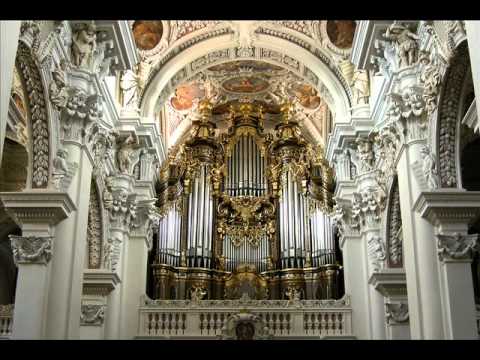
A compositional technique characterized by the systematic faux of a principal theme (called the subject) in simultaneously sounding melodic lines (counterpoint). One of the well-nigh pop fugues is Bach'due south Toccata and Fugue in D Small-scale.
Ghost Note
A musical annotation with a rhythmic value, merely no discernible pitch when played. In musical annotation, this is represented past an "X" for a note head instead of an oval, or parentheses around the annotation head.
Glissando
A continuous slide up or downward between 2 notes.

Grace Note
An extra notation added as an embellishment and not essential to the harmony or melody.

Grazioso
Graceful, smooth or elegant in style – used as a management in music.
Gregorian Chant
A monodic and rhythmically free liturgical chant of the Roman Catholic Church building that adult mainly in Western and Fundamental Europe during the 9th and 10th centuries.
https://www.youtube.com/watch?v=Dlr90NLDp-0
Güiro
A Latin percussion instrument consisting of a gourd with grooves cut effectually its circumference and large holes in the bottom. Information technology is classified as a scraped idiophone. The performer holds the instrument with the holes in the bottom while scraping beyond the grooves with a stick in a rhythmic fashion.


Habanera
A Cuban dance from Havana later introduced to Spain. One of the most famous examples is institute in Bizet'southward Spanish opera Carmen, where Carmen herself sings a seductive habanera.
Half Cadence
See: Cadence. A Half Cadence is any cadence ending on the V Chord. Considering it sounds incomplete or suspended, the half cadence is considered a weak cadence that calls for continuation.
Key of C Major

Hand Bells
A percussion instrument, handbells come in diverse sizes (each size sounding a separate pitch) and are usually played in a set ranging in number from half dozen to sixty. They are usually performed by a group of musicians, either each holding a bell in each hand, or lifting them from a table.


Harmonic Minor Scale
A small-scale calibration that differs from a natural minor calibration in that the seventh note is raised one semitone both ascending and descending.

Harpsichord
An early on stringed keyboard musical instrument that produced tones by ways of plucking strings with quills rather than past striking them with hammers, as in the modern piano. The range of the harpsichord is generally about iv octaves; it was nigh pop in the Renaissance and Baroque eras, in the classical era it was eclipsed past the piano.

Haupstimme
German or "Primary Voice", it is used to indicate that a sure instrument or part is conveying the melody. in opposition to Nebenstimme. Nebenstimme (German for secondary voice) or Seitensatz is the secondary part (a secondary contrapuntal or melodic office, ever occurring simultaneously with, and subsidiary to, the Hauptstimme). The practice of mark the primary phonation within the musical score/parts was invented by Arnold Schoenberg.
Haute-Contre
A rare type of high tenor voice, predominant in French Baroque and Classical opera until the latter function of the eighteenth century. In range, it is equivalent to the alto and was normally written in the alto clef.
Hemiola
In music, Hemiola is the ratio 3:two. In pitch, Hemiola refers to the difference between two strings that create the interval of a perfect 5th. In rhythm, Hemiola refers to 3 beats of equal value in the time normally occupied past 2 beats.

Hocket
A technique used in medieval music in which two or three vocalisation parts are given notes or brusk phrases in rapid alternation, producing an erratic, hiccuping event. The notes from each office make up the overall tune, though they are not sung at the aforementioned time.

Improvisation
Also called Extemporization, it is the creative activity of immediate, "in the moment" musical composition.
Incalzando
A directive to a musician to perform the indicated passage of a limerick in a pressing or chasing manner.
Interval
The deviation between ii pitches. Intervals can exist classified equally: Major, Pocket-sized, Augmented, Diminished, and Perfect.
- Major and Minor intervals are the intervals created by the key signatures in Major or Minor Keys without any added augmentation or macerated tones.
- Perfect Intervals are used when referring to Unison, 4ths, 5ths, and Octaves. These intervals are very potent and are given the name "Perfect" because whether they cardinal signature is Major or Pocket-sized, these intervals stay the same.
- Augmented Intervals are wider by one semitone (half-step) than perfect or major intervals.
- Diminished Intervals are smaller by 1 semitone (half-footstep) than perfect or minor intervals.
Though these intervals tin can be used in various ways, Augmented 4ths and Diminished 5ths are the about common uses of Augmented/Diminished Intervals.

Key of C Major
Inversions
The rearrangement of notes in a triad or seventh chord and then that dissimilar scale degrees are in the lowest position of the chord. See: Seventh Chord
Triad Inversions
- Root Position: The Root or Scale Caste 1 is in the Bass
- 1st Inversion: The third Scale Degree is in the Bass
- 2nd Inversion: The fifth Calibration Degree is in the Bass
Primal of C Major

The numbers next to the Roman Numerals point inversions.
6 = First Inversion
6/4 = 2d Inversion
Seventh Chord Inversions
- Root Position: The Root or Calibration Degree 1 is in the Bass
- 1st Inversion: The tertiary Scale Degree is in the Bass
- 2nd Inversion: The fifth Calibration Degree is in the Bass
- tertiary Inversion = The 7th Scale Degree is in the Bass
Primal of A Small

7 = Root Position
6/5 = Get-go Inversion
4/3 = Second Inversion
four/two = Third Inversion
Irato
A directive to a musician to perform the indicated passage of a composition in an agitated style, every bit if irate, aroused, or passionate.
Isorhythm
A musical technique using a repeating rhythmic design, chosen atalea, in at least one vocalism part throughout the limerick.

Isorhythm in the Treble Clef.
Jitterbug
A lively, improvisational, athletic style of dancing performed to syncopated music which originated in New York in the 1940s and 1950s.
Jive
A lively way of trip the light fantastic pop especially in the 1940s and 1950s, performed to swing music or stone and curlicue.
Klangfarbenmelodie
German language for tone-color melody, it is a musical technique that involves splitting a musical line or melody between several instruments, rather than assigning information technology to just one instrument, thereby adding color and texture to the melodic line. Listen to the first infinitesimal of the piece to hear a demonstration.
Leading Tone
Also referred to as subtonic, it is the seventh note of the calibration where there is a potent desire to resolve on the tonic. Come across: Calibration Degrees.

Ledger Lines
The curt, horizontal lines added to the top or the bottom of a staff for the indication of notes too high or too low to exist represented on the staff.

Legato
In a smooth, flowing fashion, without breaks between notes. Standard notation indicates legato either with the word legato or by a slur (a curved line) under notes that grade one legato group.
Leitmotif
Run across: Motif. A short, constantly recurring musical phrase associated with a particular person, identify, or thought.
For example, if you've ever seen Lord of the Rings, there is a theme associated with the Hobbits that occurs throughout all three movies, and even into 'The Hobbit' series as well.
"Concerning Hobbits" – Lord of the Rings

Libretto
The text on an extended musical piece of work such as an opera, operetta, masque, oratorio, cantata, or musical.
Lied
German for "vocal". Lieder in the plural is used more specifically to indicate songs in the great German tradition of songwriting exemplified by the work of Schubert, Schumann, Brahms, Hugo Wolf, Richard Strauss, and others.
Lieto Fine
Italian for "happy ending" the Lieto fine was a major characteristic of Opera in the 17th and 18th centuries. During this time period, information technology would have been extremely rare to find an Opera ending in tragedy.
Lute
An instrument popular in the Medieval and Renaissance eras. The lute is a plucked string instrument of the guitar family, information technology has a short, fretted neck, a rounded back, and a large trunk something between oval and pear-shaped.

Lydian Manner
The mode represented past the natural diatonic calibration F–F (containing an augmented fourth). It can also exist thought of equally a major scale with a raised 4th scale degree.
F Lydian Scale

C Lydian Calibration

Madrigal
A vocal music course that flourished in the Renaissance. Mostly written for four to six voices, madrigals are normally set up to short dear poems. The madrigal is characterized by give-and-take-painting and harmonic and rhythmic contrast. In the madrigal, each line has its own tune, rather than the entire limerick having a unmarried melody with harmonic accompaniment.
Marcato
A musical direction indicating a note, chord, or passage is to exist played with stiff accentuation.
Melodic Minor Scale
A minor scale modified by raising the 6th and 7th scale degrees when ascending, and then restoring them to their original pitches when descending.

Melomaniac
One with an abnormal fondness of music; a person who loves music.
Messa Di Voce
A musical technique that involves a gradual crescendo and diminuendo while sustaining a single pitch.
Mezzo-Soprano
The middle-range vox type for females. It lies between the soprano and contralto ranges. The typical range of this voice is betwixt A3 to A5, though some voices may achieve even further. Although this phonation overlaps both the contralto and soprano voices, the tessitura of the mezzo-soprano is lower than that of the soprano and higher than that of the contralto.

Minuet
A slow, stately ballroom dance for 2 in triple time. Originating in French republic, it was a popular dance among European aristocracy until the end of the 18th century.
Manner
Refers to a type of scale, coupled with a set of feature melodic behaviors. Modes tin be confusing and difficult to master, so nosotros've written a separate Guide to Musical Modes | Tip and Tricks to Memorize Each Mode.
Modulation
The act or process of changing from one key to another.
Monochord
An ancient instrument used for performing and teaching every bit well as tuning and experimentation. It consists of a unmarried string stretched between two fixed bridges. A third movable bridge is placed betwixt the two stock-still bridges which can suit the length of the vibrating cord, thus changing the pitch produced past plucking the string.

Motif
A short musical idea.
This idea volition appear ofttimes in a piece of music, sometimes exactly the same and sometimes changed. When a motif returns, it can be slower or faster, or in a unlike key. Information technology may render "upside downwards" (with the notes going up instead of down, for example), or with the pitches or rhythms altered.
Natural
A symbol [♮] that cancels the outcome of a sharp or a flat.
Neapolitan Chord
A major chord congenital on the lowered second (supertonic) scale degree. Information technology can also be called a Phrygian II, since in Small-scale Scales the chord is built on the notes of the corresponding Phrygian manner. It nigh commonly occurs in first inversion so that information technology is notated either equally ♭II6 or N6 and is normally referred to as a Neapolitan sixth chord.
Neutral Clef
A symbol located at the showtime of a musical staff used to indicate that none of the instruments reading the notation accept a definite pitch.

Nocturne
A curt composition of a romantic or dreamy character suggestive of night, typically for piano.
Nocturne in Eb Major, Opus ix, No. 2 – Frederic Francois Chopin
Nonharmonic Tone
A tone or note that is not a role of the chord that is sounding. For example, the F in the extract below would exist considered a nonharmonic tone because information technology does non belong in the C Major Chord that is sounding.
There are many dissimilar types of nonharmonic tones, depending on how the notes are approached and delivered. The traditional types are as follows (each has an abbreviation it is associated with):
- Passing Tone (p). Ex. 1 Approached by a step and so continues by pace in the same direction. This nonharmonic tone is usually unaccented (not occurring on the beat).
- Neighbor Tone (due north). Ex. two Approached by a footstep and resolved by a step. This nonharmonic tone is commonly unaccented (not occurring on the beat).
- Incomplete Neighbor (in). Ex. iii Approached by a rest (or by zippo) and resolves past a step.This nonharmonic tone is normally unaccented (not occurring on the beat).
- Suspension (south). Ex. 4 A notation that is repeated or held from the previous chord and then resolves down by stride to a chord tone. This nonharmonic tone is usually accented (occurring on the vanquish). *See Suspension
- Retardation (r). Ex. 5 A note that is repeated or held from the previous chord and so resolves up by step to a chord tone. This nonharmonic tone is unremarkably accented (occurring on the beat).
- Anticipation (an). Ex. vi Approached by a step and and then remains the same. Information technology is essentially a note from the second chord played early on. This nonharmonic tone is usually unaccented (not occurring on the beat).
- Pedal Tone (ped) Ex. 7 A repeating tone that usually occurs in the bass, and normally changes betwixt harmonic and nonharmonic. This nonharmonic tone is usually accented (occurring on the crush).
- Appoggiatura (ap). Ex. 8 Approached past leap and resolves stepwise (normally in the reverse management). This nonharmonic tone is usually accented (occurring on the beat).
- Escape Tone (e) Ex. 9 Approached by step; so resolves by leaping (usually in the opposite direction). This nonharmonic tone is normally unaccented (not occurring on the beat).
- Cambiata or Changing tones (cam). Ex. 10A pair of notes separated by the interval of a 3rd, approached by step and resolved by step (normally to the note in-between the third). This nonharmonic tone is normally unaccented (not occurring on the shell).

Oblique Motion
The motion of 2 melodic lines where one phonation is stationary equally the other vocalisation moves in either management.

Ocarina
The ocarina is an aboriginal air current musical instrument—a type of vessel flute. Variations exist, but a typical ocarina is an enclosed space with iv to twelve finger holes and a mouthpiece that projects from the body. It is traditionally made from clay or ceramic, only other materials are also used—such as plastic, wood, glass, metal, or bone.

Octatonic Scale
Whatever viii-notation musical calibration.
Ode
A vocal written in commemoration and commemoration of a particular outcome, object, or person. Purcell and Handel were of import composers of odes in English Bizarre music. One of the duties of the Master of the King's Musick (the well-nigh of import royal ensemble in England during the Baroque Era) was to compose odes for special occasions such as New Yr's Day, birthdays, deaths, etc.
Oliphant
An ivory horn of Medieval Europe, usually ornately decorated and primarily used as a sign of status and wealth rather than equally a musical instrument.

Opera
A drama set to music, unremarkably sung throughout, originating in 17th century Italy. Opera is a combination of music, drama, scenery, costumes, dance, etc., to create a consummate art class.
Ornaments
Tones used to embellish the chief melodic tone.
The symbols in this excerpt betoken decoration.
The symbol in mensurate two is chosen amordent, and the symbol in measure out three is called aturn.

This is what the ornamentation looks like when notated.

In that location are many different types of decoration; nosotros just picked two archetype types for this example (a mordent and a turn). You lot can also embellish melodies with your own written ornamentation!
Ostinato
A musical rhythm or phrase that is repeated over and once more. There is an ostinato in the bass clef of this excerpt:

Overture
An orchestral slice at the showtime of an opera, suites, play, oratorio, or other extended limerick. A very famous example is Rossini'south "William Tell Overture".
This piece has been used in countless films and television shows, including the Looney Tunes!
https://www.youtube.com/spotter?five=kj6fkrYr_ts
Parallel Motion
When two voices motility in the same direction so that they keep the same interval between them.
An instance of parallel 6ths.

When it comes to writing or arranging music, here are a few kinds of Parallel Motion that you generally want to avoid: Parallel 5ths and Parallel Octaves. Though many famous composers have cleaved this rule, parallel 5ths and parallel octaves are usually avoided by the fact that theyweaken the overall harmonic structure.
An example of parallel fifths (measure 1) and parallel octaves (measure 2).

Parody
A limerick based on a preview work. This was a mutual technique used in Medieval and Renaissance music only has also made a presence in the 21st Century with artists like Weird Al Yankovic.
"A Musical Joke" – Mozart

"Eat It" – Weird Al Yankovic
https://world wide web.youtube.com/lookout?v=ZcJjMnHoIBI
Pedal Signal
A sustained annotation during which the harmony above it changes in some manner and then that the overall audio becomes dissonant.
Notice how the harmony changes in the upper three voices, but the bass stays the aforementioned.

Pentatonic Scale
A scale consisting of five notes inside ane octave.
Major Pentatonic Scales utilise scale degrees: 1, 2, 3, 4, and half-dozen.
C Major Pentatonic Calibration
 Minor Pentatonic Scales use calibration degrees: 1, 3, 4, 5, and vii.
A Minor Pentatonic Calibration

Perdendosi
A directive to perform the indicated passage of a composition in a manner that the sound dies away, gradually diminishing in book, rhythm, and tone.
Perfect Authentic Cadence
A cadency ending in 5 – I, where both chords are in root position, and the tonic scale degree is the highest note of the concluding I chord.

Perfect Pitch
The power to recognize the pitch of a note or to produce any given annotation without the benefit of a reference tone.
Picardy Third
A major chord of the tonic at the end of a musical section that is either modal or in a minor cardinal.
Key of E Minor

Notice that the G# in the last measure out makes the final chord major.
Piccolo
A small flute whose range is an octave higher than that of an ordinary flute.

Pin Chord
Used for a smooth modulation, it is a chord that is mutual to the electric current key, and the one being modulated into.

Plagal Cadence
Encounter: Cadence. A cadency in which the tonic chord is preceded by the subdominant chord (IV-I).
C Major

Poco a poco
An Italian phrase that means "little by fiddling," and is used with other musical commands to brand their efforts slow and gradual.
Polytonality
The combination of 2 or more keys being played at the same fourth dimension.
Polyrhythm
A rhythm that makes utilize of two or more different rhythms simultaneously.

Prima Donna
Italian for "first woman," the prima donna is the chief female singer in an opera or concert organization. The corresponding term for the male lead is primo uomo, which is Italian for "first human."
Primary Chords
Chords congenital on calibration degrees i, 4, and five. For example, in the key of C Major, the primary chords are C, F, and G.
Quart De Soupir
The French term for a sixteenth residual.
Ragtime
An American way of music characterized by "ragged" or syncopated rhythms. Popular between the 1890'southward and the 1910's, Scott Joplin was a major exponent of ragtime. By the 1920's ragtime had given way to jazz.
Rallentando
A gradual subtract in tempo containing less certainty and drama than the ritardando.
Real Volume
It tin refer to whatever of a number of popular compilations of atomic number 82 sheets for jazz tunes only is generally used to refer to Volume ane of an underground series of books transcribed and collated past students at Berklee Higher of Music during the 1970s. Information technology got its name to distinguish it from the widely available fake books by providing melody lines, while fake books printed only chords and lyrics of standard songs.
The Real Book is also available in different editions to adapt B♭, E♭, and C (concert-pitch) instruments, equally well as bass clef and voice editions ("low" and "high" voice, with lyrics included). A band leader tin conveniently call out page numbers since each edition is also paginated identically.
Recitative
A rhythmically free song style that imitates the natural inflections of speech. It is most commonly used for dialogue and narrative in operas and oratorios and is many times found preceding an aria.
Relative Keys
The major and minor scales that share the same key signature. For example, A Pocket-size and C Major.
List of Relative Keys

Relative Pitch
The ability of a person to identify or re-create a given musical annotation past comparing it to a reference notation and identifying the interval betwixt those two notes. This is different from perfect pitch, where no reference note is needed to determine a note.
Remote Keys
Those keys that have few notes in common. For example, the keys of C Major and F Sharp major would be considered remote.
Retrograde
A term pregnant "backward" or "the series is sounded in reverse club." Retrograde reverses the society of the motive's pitches: what was the first pitch becomes the last, and vice versa.
Measure out ii indicates Retrograde.

Riff
A prominent characteristic in pop and jazz compositions, a riff is a brusque ostinato (a short melodic, rhythmic, or harmonic pattern that is repeated throughout an entire limerick or some portion of a composition), two to iv bars long.
Ritenuto
An indication to suddenly and temporarily decrease the tempo; to concur dorsum for dramatic effect. This is unlike from a Ritardando, where the tempo gradually decreases.
Rockabilly
A genre of pop music in America that was an early form of stone n' roll music in the 1950s. Information technology was derived from hillbilly music (early Country & Western music), western swing, boogie-woogie, and rhythm and blues.
Rondo
A musical form with a recurring leading theme often institute in the final move of a sonata or concerto.
Eine Kleine Nachtmusik KV. 525 4. Rondo: Allegro – Mozart
Root
The fundamental pitch on which a chord is based, from which the chord takes its name, and to which the other tones of the chord are referred to (the third, seventh, etc.)

Rudiment
Central strokes or patterns that are basic to all drum music and technique. In that location are over forty such patterns used in therudimental style of snare drumming.
Sarabande
A slow dance in triple meter, generally found in the Baroque instrumental suite. The trip the light fantastic seems to have been Latin American in origin, imported from Latin America to Spain in the 16th century.
Calibration Caste
Refers to the position of a particular note on a scale relative to the tonic (the starting time and main note of the scale from which each octave is causeless to brainstorm). Degrees are useful for indicating the size of intervals and chords, and whether they are major or minor.
Scale Degrees may be identified in several ways. The about common ways are numbers, roman numerals, and names (referring to role).
Numbers (C Major)

Roman Numerals (C Major)

Roman Numerals (A Modest)

Names (C Major)

Roman Numerals are usually used when referring tochords rather than individual notes.
Scherzo
A vigorous, calorie-free, or playful composition, typically comprising a move in a symphony or sonata.
Scherzo 2 in Bb Modest, Op. 31, No. 2 – Chopin

Secondary Ascendant
An altered chord having a dominant or leading tone relationship to a chord in a key other than the tonic. For a deep dive into Secondary Dominants, check out our commodity: Intro to Secondary Dominants: What Are They and How to Use Them.
An altered chord is a chord containing at least one tone that is foreign to the primal.
To give one example, let's showtime with a common chord progression in the key of C Major.

Now, let's add a Secondary Ascendant before the G Major Chord.
Why G Major? Secondary Dominants are most commonly used when budgeted Dominant Chords (Five Chords), though they are not spring to them.
The chord we are budgeted is 1000 Major, which is the Ascendant Chord in our tonic key (C major). To notice the Secondary Dominant, nosotros need to find the Ascendant (in 1000 Major) of the Dominant
(in C Major), which is D Major. Discover that D Major also uses an F# instead of the F Natural the key of C Major uses. This is what makes D Major an contradistinct chord in the key of C Major.

Thousand = V (Ascendant) in C Major
D = V (Ascendant) in G Major
Call back that 5 is the Roman Numeral used for the 5th scale degree (also called the Ascendant) in any central. That's why the Roman Numeral Analysis for Secondary Dominants looks like a fraction. It is simply saying that this chord is the V of the 5 Chord.
Finally, let's use some inversions to give the progression a smoother sound. Give it a endeavor!

Remember that Secondary Dominants can be used in other ways equally well! Y'all can approach other chords besides the V (Dominant Chord). You can as well utilize the vii diminished chord as Secondary Dominant. Check out these examples, and so get to experimenting!
Example in D Major

Example in Thousand Major

Semitone
Also chosen a half step or a one-half tone, it is the smallest musical interval normally used in Western tonal music, and it is considered the most anomalous when sounded harmonically. It is defined equally the interval between two adjacent notes in a 12-tone scale. For case, C is side by side to C♯; the interval between them is a semitone.

Sequence
A melodic or choral figure repeated at a new pitch level.

Seventh Chords
Chords consisting of a triad plus a notation forming an interval of a seventh above the chord'south root. Though there are unlike types, when not otherwise specified, a "seventh chord" commonly means a Dominant Seventh Chord: a major triad together with a pocket-sized seventh. Even so, at that place are several unlike types of Seventh Chords:

Major 7th Chord Intervals:Major Third, Major Third, Major Tertiary
Dominant 7th Chord Intervals:Major Third, Major Third, Minor Third
Modest 7th Chord Intervals:Small Tertiary, Major Tertiary, Small-scale Third
One-half-Macerated 7th Chord Intervals:Minor Tertiary, Minor Third, Major Third
Diminished 7th Chord Intervals:Minor Third, Minor Third, Small-scale Third
See: Inversions.
Sforzando
An indication to make a strong, sudden accent or emphasis on a note or chord. Information technology is usually represented by this symbol:

Unproblematic Meter
Meters that split up the shell into ii equal parts. For instance, 4/4 Fourth dimension is an example of uncomplicated meter because a quarter note (The beat) tin can be divided into two 8th notes.
Simple Meter Compound Meter
See: Compound Meter.
Slentando
A directive to perform the indicated passage of a composition with a relaxed tempo, to become slower.
Slur
Indicates to play 2 or more notes in 1 physical stroke, one uninterrupted breath, or (on instruments with neither breath nor bow) connected into a phrase as if played in a single jiff.

Solfege
An exercise used for sight-reading song music in which each scale caste is assigned a coordinating syllable.

- The well-nigh standard form of solfege is a Fixed-Practice System. This means that the syllable "do" is always coordinated with the first scale degree of whichever key you're in.
- A less common form of solfege is the Moveable-Do System. In this instance, the syllables are always assigned to the notes in a C Major Scale (where "C" would be "practise"), regardless of the primal.
In the case of raised or lowered calibration degrees, the solfege syllable vowel changes to an
"i" for sharping, and "e" for flatting. The exception is when flatting "re", in which case you get to "ra".

To learn more most Solfege, check out our article: Solfege: What Is It, And How Is Information technology Used?
Sonata
An instrumental musical composition typically containing three or 4 movements in contrasting forms and keys. One of the most popular Sonatas of all time is Beethoven's "Moonlight Sonata".
Soprano
The highest female singing vox. The typical soprano phonation lies between C4 and C6, though many voices tin accomplish beyond.

Sostenuto
A musical direction indicating that a note or passage be sustained or lengthened.
Sostenuto Pedal
Larger pianos typically take three pedals–the sostenuto pedal existence in the middle. This pedal will sustain merely those notes that are being held downwards when the pedal is depressed, allowing future notes played to exist unaffected. It is ordinarily abbreviated "S.P."
Spiccato
A bowing technique for string instruments in which the bow appears to bounce lightly upon the cord. The term comes from the past participle of the Italian verb spiccare, meaning "to separate".
Sprechstimme
A vocal style that combines elements of song and speech.
Staccato
A style of playing notes in a detached, separated, distinct manner, equally opposed to legato. Staccato is indicated past a dot directly above or below the notehead.
Stringendo
A musical direction that indicates progressively quickening in tempo.
Strophic Class
Besides chosen verse-repeating or chorus form, it is the term practical to songs in which all verses or stanzas of the text are sung to the same music. "Amazing Grace" would be an case of a Strophic Form song.
Subdominant
The quaternary tone of a major or modest scale.
Music which modulates often modulates into the subdominant when the leading tone is lowered by a half step to the subtonic (B to B♭ in the primal of C). Modulation into the subdominant key oft creates a sense of musical relaxation; as opposed to modulation into dominant (fifth scale caste), which increases tension. Come across: Calibration Degree.
Suspension
A means of creating tension by prolonging a note while the underlying harmony changes, normally on a strong beat.

This particular kind of Suspensions is chosen a 4-3 Suspension because the suspended notation is quaternary above the bass (G) and it resolved to a 3rd above the bass (F#).
Syncopation
A disturbance or pause of the regular flow of downbeat rhythm with emphasis on the subdivision or off-beat.
Detect this extract of music.

Now look at the same excerpt wit the beats fatigued in and notice all of the notes being played outside of the beat (on the off-beat).

Tam-Tam
A percussion musical instrument similar to a gong. Typically thinner than a gong, the tam-tam has a smaller rim and no protrusion in the center. Either flat or saucer-shaped, the shape and construction produce a great difference in sound. It has no discernable pitch or fundamental note, simply a crash of dissonant frequencies.

Tenor
The tenor is the highest type of male person vocalisation, typically comfy between C3 to C5. Tenors generally take greater command over their falsetto (head vocalization), allowing them to achieve notes well into the female annals. Those who tin sing higher than the average tenor are oft given the title "countertenor."

Tempo
A term indicating how fast or tedious to play/sing a slice of music. The well-nigh ordinarily used tempo terms (from slowest to fastest) are equally follows:
- Larghissimo – very, very irksome (24 bpm and under)
- Adagissimo
- Grave – very irksome (25–45 bpm)
- Largo – broadly (40–60 bpm)
- Lento – slowly (45–60 bpm)
- Larghetto – rather broadly (60–66 bpm)
- Adagio – deadening and stately (literally, "at ease") (66–76 bpm)
- Adagietto – slower than andante (72–76 bpm)
- Andante – at a walking footstep (76–108 bpm)
- Andantino – slightly faster than andante (although, in some cases, it can be taken to hateful slightly slower than andante) (eighty–108 bpm)
- Marcia moderato – moderately, in the manner of a march] (83–85 bpm)
- Andante moderato – between andante and moderato (thus the name) (92–112 bpm)
- Moderato – at a moderate speed (108–120 bpm)
- Allegretto – by the mid 19th century, moderately fast (112–120 bpm)
- Allegro moderato – close to, just not quite allegro (116–120 bpm)
- Allegro – fast, speedily, and bright (120–168 bpm)
- Animato – animated
- Agitato – allegro plus agitation
- Veloce – with velocity, speedily
- Vivace – lively and fast (168–176 bpm)
- Allegrissimo or Allegro vivace – very fast (172–176 bpm)
- Presto – very, very fast (168–200 bpm)
- Prestissimo – even faster than presto (200 bpm and over)
- Vivacissimo – very fast and lively (172–176 bpm)
Ternary Class
Sometimes called "song form", is a three-part musical grade where the first section (A) is repeated after the second section (B) ends. It is usually schematized equally A–B–A. An example of a song in Ternary Class would be Chopin'southward "Raindrop Prelude" (Op. 28 No. 15).

Tessitura
The general range of pitches found in a melody or vocal function.
Tetrachord
A scale of four notes, or a series of four notes (usually played one after the other), where the interval between the get-go and terminal notation is a perfect fourth.
C Major Tetrachord

Theme and Variation
A song form consisting of a melody (theme), followed past variations of that melody. Composers often use theme and variation to write an entire slice or to write i motion of a larger piece. It is most often used in instrumental music.
Through-Composed Form
A blazon of song form that ways that the music is relatively continuous, not-sectional, and/or not-repetitive. A song is said to be through-composed if it has different music for each stanza of the lyrics.
Timbre
The quality of a musical tone that distinguishes voices and instruments.
Time Signature
A fix of numbers (one on pinnacle of the other) notated after the clef at the beginning of a piece that indicates how many beats are in each measure and which note value is equivalent to one beat.
- Peak Number = how many beats are in the measure
- Bottom Number = what kind of note gets the beat
- 1 = Whole Annotation
- ii = Half Note
- iv = Quarter Annotation
- viii = 8th Note
- 16 = Sixteenth Annotation
3/4 Time means in that location are3 beats in a measure and thequarter annotation gets the shell.

vi/eight Time means there are 6 beats in a measure and theeighth note gets the beat.

Tin Whistle
Also referred to as a penny whistle, it is a folk wind musical instrument similar to the recorder, but unremarkably made of tin. Information technology generally has 6 finger holes and is prominent in British and Irish gaelic folk music.

Tone Cluster
A musical chord comprising at least three next tones in a calibration.

Tonic
Besides called the keynote, information technology is the first notation of any major or minor scale. For example, B is the tonic in B Major. See: Scale Degrees.

Tremolo
Quick repetition of the aforementioned note or the rapid alternation between two notes.
Transposition
A useful tool for musicians, it is the procedure of playing or writing music in a unlike key.
Triplet
A grouping of three notes played inside another note-length; a portion of musical time that's been split rhythmically into three equal parts.

Tristan Chord
A chord fabricated up of the notes F, B, D#, and G#. More by and large, it can exist any chord that consists of these same intervals: augmented 4th, augmented sixth, and augmented ninth above a bass annotation.
Though this chord is technically an odd spelling of an F half-diminished chord [F, Ab (G#), Cb (B), Eb (D#)] this particular spelling and use of the notes is particular to Richard Wagner. It is heard in the opening phrase of Richard Wagner'due south opera Tristan und Isolde as part of the leitmotif relating to the character Tristan, and so it was named after the performance.
Tutti
A passage for the entire ensemble or orchestra without a soloist.
Viola
The second highest-pitched member of the violin family. The viola is similar to the violin in most respects. Nevertheless, information technology is larger and is a fifth lower in range.

Virtuoso
Performing with exceptional ability, technique or artistry.
Vocalise
A vocal work, whether an practice or something more musically substantial, that has no words. IT is commonly used to develop flexibility and control of pitch and tone.
Wagner Tuba
A tuba invented by the composer Richard Wagner to be used in his operas. Information technology is smaller than the orchestral tuba and has a range between that of the horn and the trombone. Its somber, majestic tone has inspired other composers such as Strauss, Bruckner, and Stravinsky to include it in compositions.

Waltz
A ballroom dance that is written in triple time with a strong emphasis on the first beat.
Well-Tempered
A term practical to an instrument that is voiced and tuned satisfactorily, with the pitches, tone, and timbre accept the desired quality of sound.
Whole Tone Scale
A scale in which each note is separated from its neighbors by the interval of a whole tone.

Yodel
A manner of singing or calling that involves switching the registers of the voice rapidly from head voice to chest voice (or falsetto and natural voice). Forms of yodeling can exist found in several cultures, including cowboy singers in the United States such equally Roy Rogers and Gene Autry.
Disclosure of Material Connection: Some of the links in the post above may exist "affiliate links." This means if you click on the link and make a purchase, Musicnotes volition receive an affiliate commission. We are disclosing this in accordance with the Federal Trade Commissions 16 CFR, Office 255: "Guides Concerning the Use of Endorsements and Testimonials in Advertizing."
Source: https://www.musicnotes.com/now/tips/glossary-of-musical-terms/
0 Response to "Harmonies That Moves From Resting to Tension and Back Again Are Called"
Post a Comment